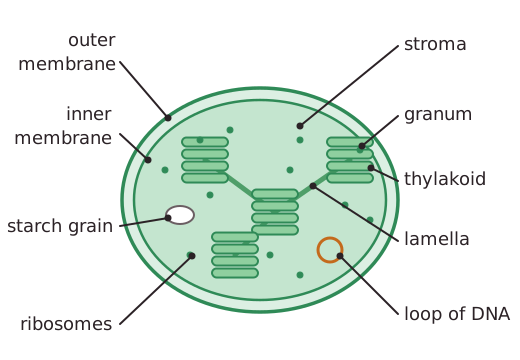
Chloroplasts are found in the leaves and stems of plants and are the site of photosynthesis.They consist of a double membrane enclosing stacks of flattened sacs called thylakoids, linked together by membranes called lamellae.Each stack is called a granum.The thylakoids contain a pigment called chlorophyll which is responsible for converting light energy to chemical energy stored in ATP and an electron carrier. The fluid interior is called the stroma and may contain starch grains or oil droplets for energy storage.Chloroplasts also contain a single loop of DNA that contains the information for the synthesis of proteins needed in photosynthesis. The thylakoid membranes provide a large surface area for photosynthesis.