 BRAINCAKE
Virus Life Cycle
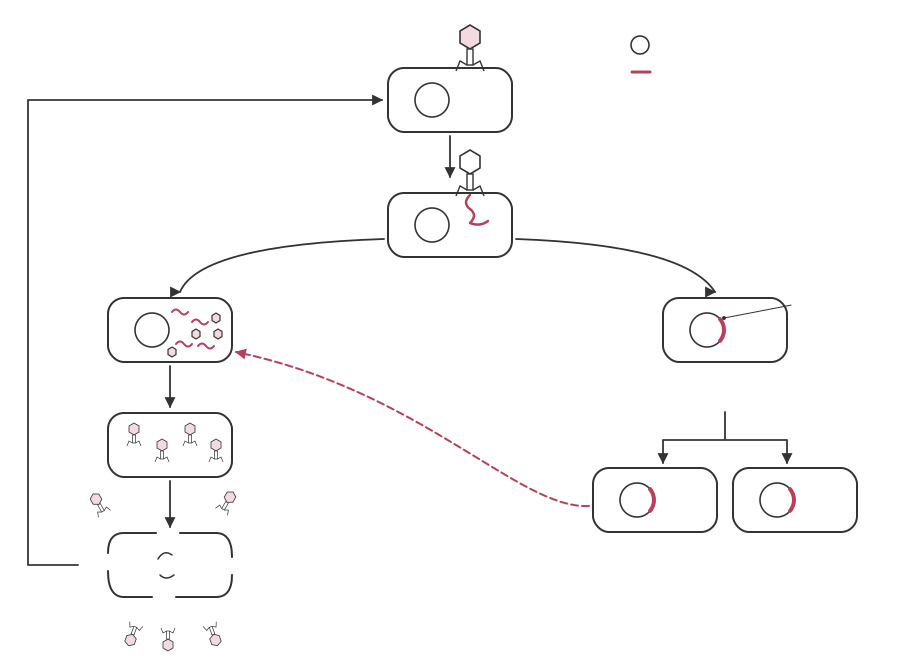
Although viruses differ in detail, their replication inside a host cell follows the same general sequence of stages:
1. Attachment: viral proteins bind to specific receptors on the host cell.
2. Entry (penetration): the viral nucleic acid enters the cell, by injection, endocytosis or membrane fusion.
3. Replication and synthesis: the viral genome is copied many times, and viral genes are transcribed and translated by the host to make capsid proteins and enzymes.
4. Assembly: new nucleic acid and capsid proteins come together to form new virus particles.
5. Release: new virions leave the cell, either by bursting it (lysis) or by budding through the membrane, which gives enveloped viruses their envelope.
Sign in free to see the rest of this lesson, the R.E.C.I.P.E. recall steps and the quiz
BrainCake is free. Make an account in seconds and pick up where this page stops.
Key terms in this lesson
- prophage
- Bacteriophage DNA inserted into the host bacterial chromosome and replicated along with it during the lysogenic pathway.
More in Prokaryotic Cells
- DNA Viruses
- RNA Viruses
- RNA Retroviruses
- Viral Reproduction
- DNA Virus Latency
- DNA Virus Lytic Pathway
- RNA Virus Replication
- Positive ssRNA Viruses
All 31 lessons in Prokaryotic Cells · All Edexcel AS-level Biology topics