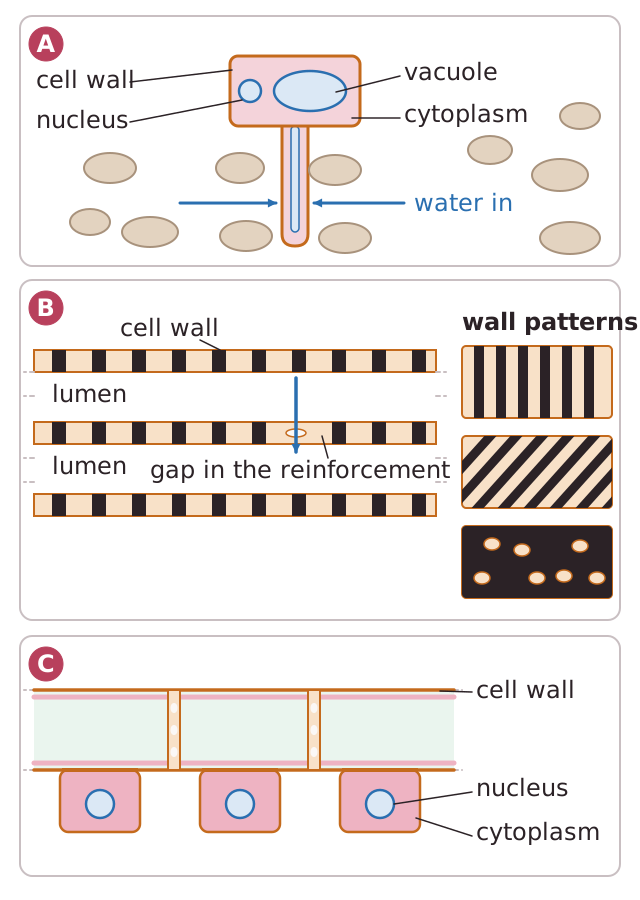
Root hair cells are epidermal cells with extensions of the cell wall and cytoplasm called root hairs. The root hairs increase the surface area of the plant cell to aid mineral ion uptake and water uptake by osmosis.Xylem vessels vary in appearance but are long tubular cells with walls thickened with a hard substance called lignin as they mature.The lignin is laid down in rings, spirals or the cell is covered with lignin except at the plasmodesmata (reticulate) where pits are formed. The cells die and the cytoplasm is lost. The end walls break down to form long, continuous hollow tubes.Phloem tissue is made of long columns of sieve tube elements, long cells with perforated end walls to allow the movement of phloem sap from one cell to the next. The cells have very little cytoplasm, so companion cells that carry out all the required metabolic processes lie next to the sieve tubes and supply the sieve tubes with metabolites.