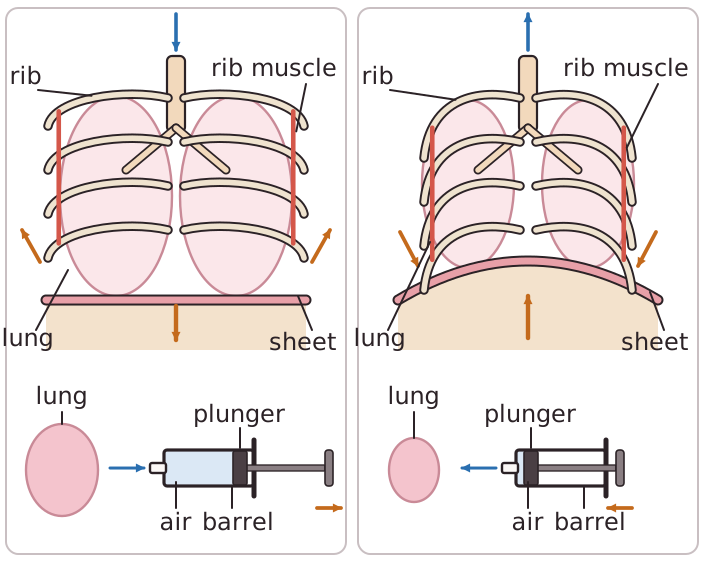
Expiration is a largely passive process that does not require much energy.1. The external intercostal muscles relax. The ribs move downwards and inwards. In forced expiration the internal intercostal muscles also contract, pulling the ribs down.2. The diaphragm relaxes causing it to dome upwards, pushed up by the contents of the abdomen.3. The volume of the thorax decreases as a result of the movement of the ribs and diaphragm.4. The pressure in the thorax increases because of the decreased volume.5. Atmospheric pressure is less than the pressure in the lungs so air is forced out of the lungs by the recoil of the elastic tissue.