 BRAINCAKE
Plant Hormones
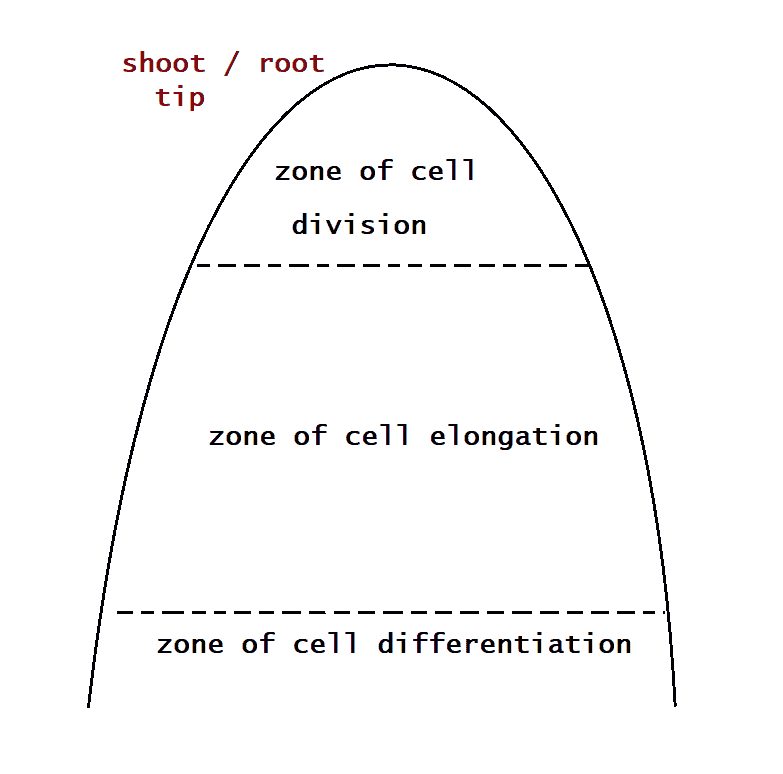
- Auxins produced at the tops of roots and shoots cause cell elongation, prevent leaf abscission, maintain apical dominance, control tropisms and stimulate the release of ethene for fruit ripening.
- Gibberellins cause stem elongation, the breaking of dormancy and the use of food stores during germination and pollen tube growth during fertilisation.
- Ethene causes fruit ripening and leaf fall.
- ABA (abscisic acid) maintains dormancy, stimulates antifreeze production and stomatal closing in response to abiotic stress.
Sign in free to see the rest of this lesson, the R.E.C.I.P.E. recall steps and the quiz
BrainCake is free. Make an account in seconds and pick up where this page stops.
Key terms in this lesson
- Hormone
- A chemical messenger, secreted directly into the blood by an endocrine gland, that travels to target cells and alters their activity.
- Tropism
- A directional growth response of a plant towards or away from a directional stimulus, such as light or gravity.
- Apical dominance
- The suppression of the growth of lateral (side) buds by auxin produced in the apical (tip) bud.
- Abscission
- The shedding of leaves, or fruit, from a plant, brought about by enzymes that digest cell walls in the abscission zone.
More in Plant Responses
- Plant Growth Responses
- Seed Germination
- Apical Dominance
- Gibberellins: Synergy and Antagonism.
- Leaf Loss
- Flowering and Day-Length
- Preventing Freezing
- Stomatal Control
All 19 lessons in Plant Responses · All OCR A-level Biology topics