 BRAINCAKE
Comparison of Neurones
The somatic nervous system has heavily myelinated neurones connecting the CNS to receptor and effector organs.
Sign in free to see the rest of this lesson, the R.E.C.I.P.E. recall steps and the quiz
BrainCake is free. Make an account in seconds and pick up where this page stops.
Key terms in this lesson
- Neurone
- A specialised nerve cell adapted to transmit electrical impulses (nerve impulses) around the body.
- Neurotransmitter
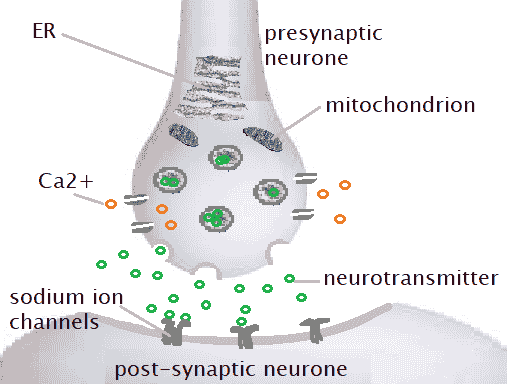
- A chemical released from the presynaptic membrane at a synapse that diffuses across the synaptic cleft and binds to receptors on the postsynaptic membrane, triggering a response.
- Effector
- A muscle or gland that brings about a response to a stimulus.
- Autonomic nervous system
- The part of the peripheral nervous system that controls involuntary functions such as those of cardiac muscle, smooth muscle and glands.
- Sympathetic nervous system
- The division of the autonomic nervous system responsible for the fight-or-flight response, generally increasing activity.
More in Neuronal Communication
- Summation
- Structural Organisation of the Nervous System
- Functional Organisation of the Nervous System
- The Autonomic Nervous System
- The Brain
- Structure of the Brain
- Cerebrum
- Association Areas
All 38 lessons in Neuronal Communication · All OCR A-level Biology topics