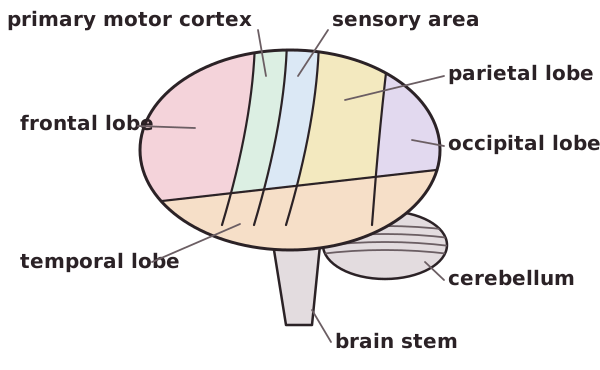
The cerebrum receives sensory information from receptors, processes it and send impulses via motor neurones to effectors to carry out the appropriate response. It is highly convoluted and has a high surface area and it is split into the left and right hemispheres. The outer 2-4mm is the cerebral cortex. The size of the sensory area depends on the number of receptors present in that part of the body. The information is passed to association areas. Impulses from the left side of the body pass to the right side of the brain and vice versa.