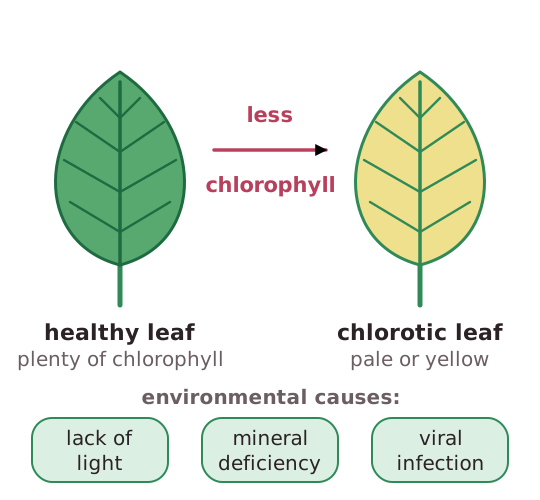
Variation occurs as a result of random mutations and is important for the process of natural selection. There are two types of variation. Inter-specific and intra-specific. Inter-specific variation is variation between different species. Intra-specific variation is variation within the same species.Intra-specific variation occurs due to a combination of differences in the genetic code of individuals and environmental factors influencing the individual's characteristics. An example is chlorosis in plants. Whilst plants are genetically coded to produce lots of chlorophyll, environmental factors such as a lack of light, mineral deficiencies or viral infections may cause them to produce less. As a result the leaves are pale or yellow and photosynthesis is reduced.