 BRAINCAKE
Nervous Control of the Heart
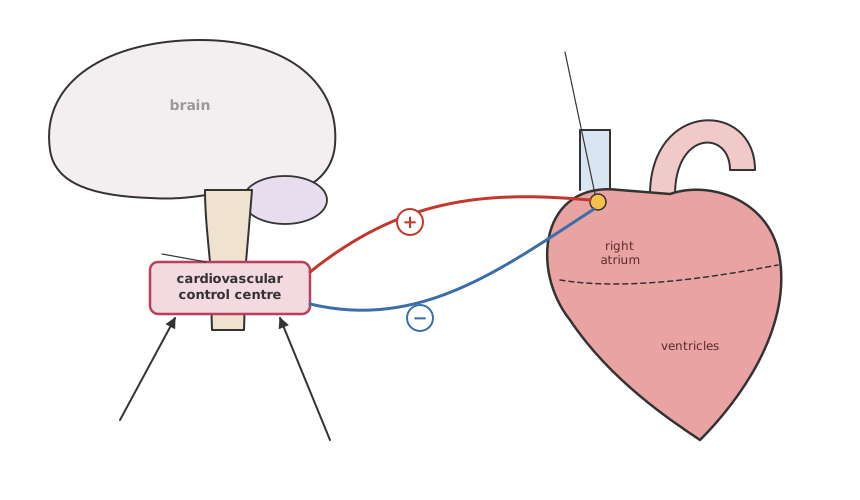
Heart rate is controlled by the cardiovascular control centre in the medulla oblongata. This centre receives information from receptors and sends impulses along two nerves of the autonomic nervous system to the sinoatrial node (SAN).
• The accelerator nerve is part of the sympathetic nervous system. Its neurones release noradrenaline at the SAN, which makes the SAN fire more often, so heart rate increases. Sympathetic neurones also supply the ventricle walls and increase the force of contraction, raising stroke volume.
• The vagus nerve is part of the parasympathetic nervous system. Its neurones release acetylcholine at the SAN, which makes the SAN fire less often, so heart rate decreases.
Sign in free to see the rest of this lesson, the R.E.C.I.P.E. recall steps and the quiz
BrainCake is free. Make an account in seconds and pick up where this page stops.
More in Homeostasis
- Controlling the Heart Rate
- Baroreceptors
- Chemoreceptors
- Hormonal Control of the Heart
- Additional Responses
- Protein Homeostasis in the Liver
- Osmoregulation
- Osmoregulation in Mammals
All 41 lessons in Homeostasis · All Edexcel A-level Biology topics