 BRAINCAKE
Euchromatin and Heterochromatin
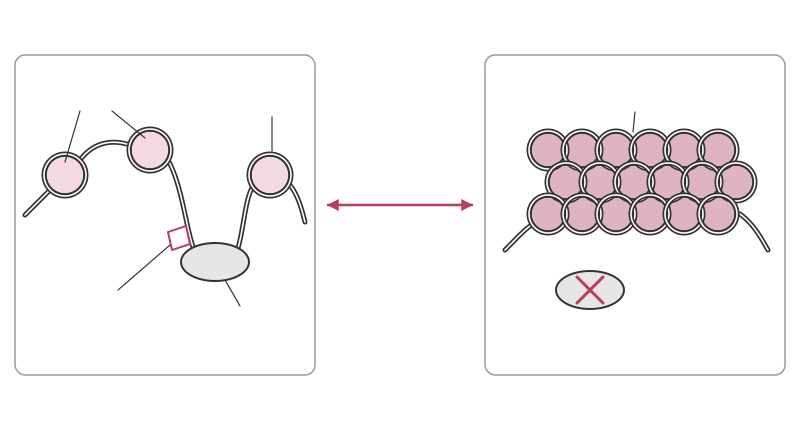
In eukaryotic nuclei, DNA is wound around proteins called histones. About 147 base pairs of DNA wrap around a core of eight histone proteins to form a nucleosome. Chains of nucleosomes coil further to form chromatin. Chromatin exists in two forms.
Euchromatin
• loosely packed, with nucleosomes spread apart
• stains lightly
• transcription factors and RNA polymerase can reach the DNA, so genes in euchromatin are actively transcribed.
Heterochromatin
• tightly packed, with nucleosomes close together
• stains darkly
• transcription factors and RNA polymerase cannot reach the DNA, so genes in heterochromatin are not transcribed.
Sign in free to see the rest of this lesson, the R.E.C.I.P.E. recall steps and the quiz
BrainCake is free. Make an account in seconds and pick up where this page stops.
Key terms in this lesson
- centromere
- The region of a chromosome where the two sister chromatids are held together, and where spindle fibres attach during cell division.
More in Gene Expression
- RNA Splicing
- Epigenetics
- DNA Methylation
- DNA Demethylation
- Histone Acetylation
- Histone Methylation
- non-Coding RNA
- siRNA
All 39 lessons in Gene Expression · All Edexcel A-level Biology topics