Physiological adaptations include colour. Dark colours absorb more radiation. The Namaqua chamelion is black in the morning but pale grey during the hotter day.Ectotherms have much lower metabolic rates than endotherms and the metabolic rate rises with the ambient temperature since the rate of enzyme action is directly related to temperature.The American wood frog (Rana sylvatica) toes start to freeze below 0°C. Within 10-15 minutes of freezing, glycogen stored in the liver is converted into glucose which is released into the bloodstream and moves into the tissue fluid. The glucose acts as an anti-freeze, lowering the freezing point of blood and tissue fluid and preventing the formation of ice crystals in the cells.
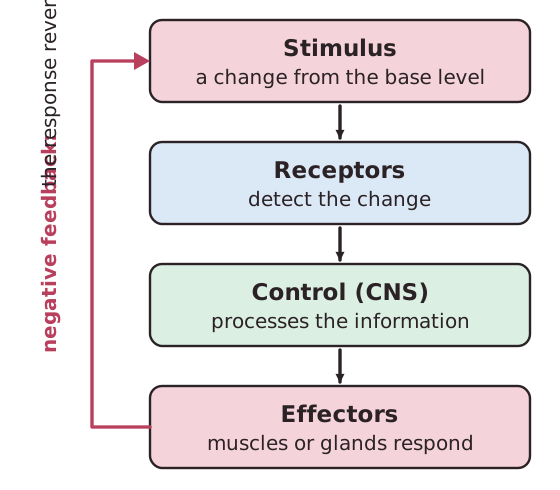
Physiological Responses in Ectotherms
Read the text
Read the text and highlight anything you think is important. When you go on, the text is hidden and you answer from memory.
Specification: AQA Biology (7402), A-level, 3.6.4.1 Principles of homeostasis and negative feedback. Topic: Homeostasis.
Key terms in this lesson
- polymerase chain reaction
- A technique for rapidly amplifying small amounts of DNA in vitro, using repeated cycles of denaturation, primer annealing and extension by a heat-stable DNA polymerase.
More in Homeostasis
- Feedback Systems
- Examples of Positive Feedback
- Endotherms and Ectotherms
- Behavioural Responses in Ectotherms
- Thermoreceptors
- The Hypothalamus
- Cooling
- Warming Up
All 33 lessons in Homeostasis · All AQA A-level Biology topics