 BRAINCAKE
Oestrogen and the Initiation of Transcription
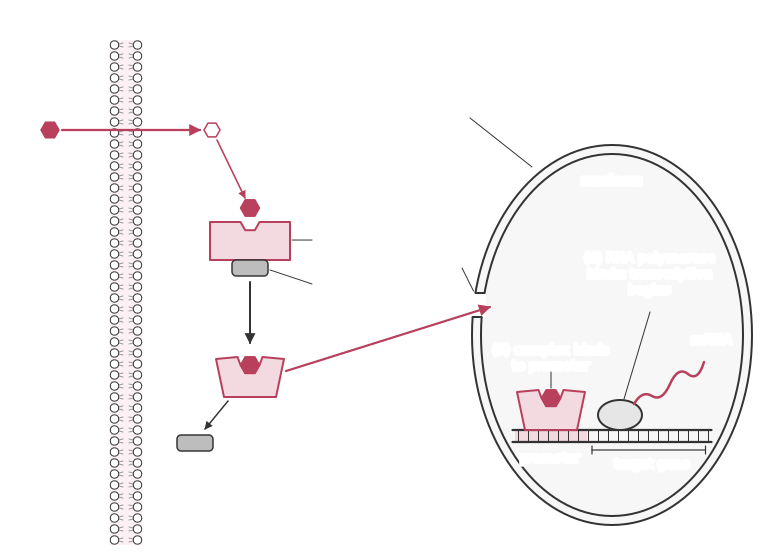
Oestrogen is a steroid hormone that switches on genes by activating a transcription factor. It shows how a signal from outside a cell can control transcription.
1. Oestrogen is lipid-soluble, so it diffuses through the phospholipid bilayer of the cell-surface membrane.
2. In the cytoplasm, oestrogen binds to a site on a receptor molecule, the oestrogen receptor, which is a transcription factor. The shape of the binding site is complementary to oestrogen.
3. Binding changes the shape of the receptor, releasing it from an inhibitor molecule that was holding it inactive. The transcription factor is now active.
Sign in free to see the rest of this lesson, the R.E.C.I.P.E. recall steps and the quiz
BrainCake is free. Make an account in seconds and pick up where this page stops.
Key terms in this lesson
- hormone
- A chemical messenger, secreted by an endocrine gland directly into the blood, that travels to target cells bearing complementary receptors and brings about a response.
- second messenger
- A chemical inside a target cell, such as cyclic AMP, that relays a signal from a non-steroid hormone bound to a cell-surface receptor to bring about a response within the cell.
More in Control of Gene Expression
- Stem Cells in Mature Plants
- Induced Pluripotent Stem Cells
- Stem Cells in Treating Disease
- Transcription Factors
- RNA Interference (siRNA and miRNA)
- Epigenetics
- DNA Methylation
- Histone Acetylation
All 18 lessons in Control of Gene Expression · All AQA A-level Biology topics