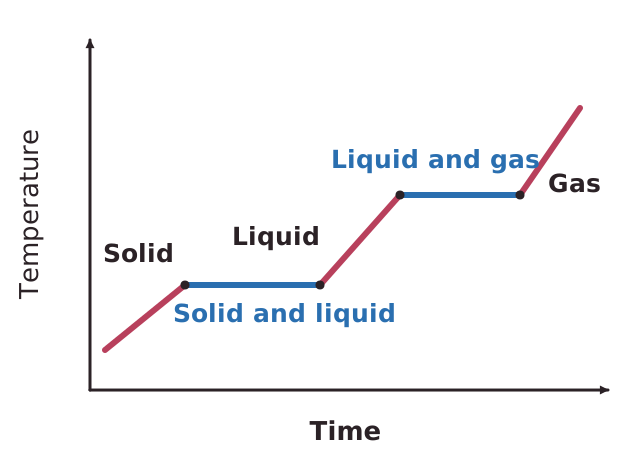
The particles in a substance have kinetic energy because they move, and potential energy because of the forces between them. The total of these is the internal energy stored in the system. Heating a system transfers energy to it, so its internal energy increases.
This can have one of two effects. If the substance stays in the same state, the particles gain kinetic energy and move faster, so the temperature rises. Temperature is a measure of the average kinetic energy of the particles.
If the substance is changing state, the energy goes into the potential energy of the particles instead, as they break away from their neighbours. The temperature stays constant until the change is complete. When ice is heated, the temperature rises to the melting point, stays there while the ice melts, then rises again as the water warms. The same flat section happens at the boiling point. A thermometer or data logger can record this.