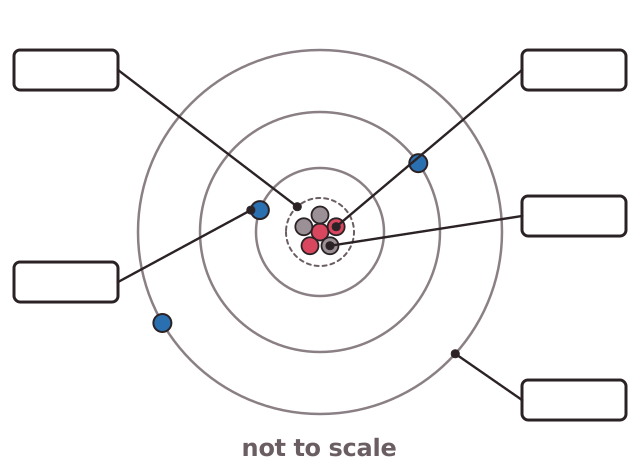
Every atom has a tiny central nucleus made of protons and neutrons. The electrons are found outside the nucleus, and they orbit it. The nucleus has a positive charge and each electron has a negative charge, so the electrons are held in the atom by the attraction between opposite charges.
The electrons cannot orbit at just any distance. Each electron is found in an orbit at a set distance from the nucleus, and the atom has a number of these different orbits to choose from. Electrons in orbits close to the nucleus are held more tightly, and electrons in the orbit furthest from the nucleus are the outer electrons.
An atom is neutral overall because it has the same number of electrons as protons.