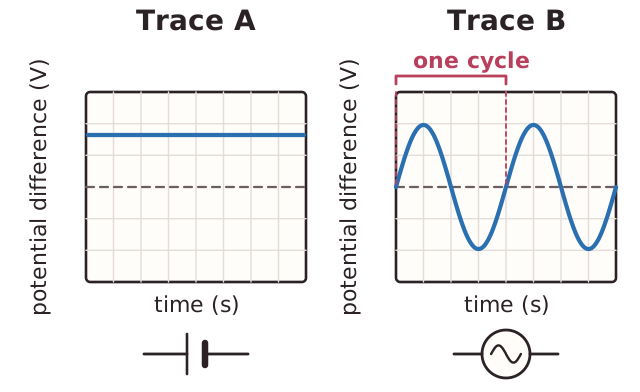
A direct voltage always pushes charge in the same direction. A cell gives a direct voltage, so its positive terminal stays positive and its negative terminal stays negative. The potential difference stays the same sign, and the current it drives is direct current (d.c.).
An alternating voltage keeps changing. Its potential difference swings from positive to negative and back again, so it reverses the direction in which it pushes charge. The current it drives is alternating current (a.c.). One full swing there and back is a cycle, and the number of cycles each second is the frequency, measured in hertz (Hz). The mains supply is an alternating voltage.
On an oscilloscope screen, a direct voltage appears as a flat horizontal line, while an alternating voltage appears as a repeating wave that goes above and below the zero line.