Energy can be transferred usefully, stored or dissipated, but it cannot be created or destroyed. This is the conservation of energy. In a closed system there is no net change in the total energy. For example, a ball thrown upwards transfers energy from its kinetic energy store to its gravitational potential energy store, and the total stays the same.
In every energy transfer some energy is dissipated. This means it is spread out into the surroundings, usually by heating, so it ends up stored in less useful ways. This energy is often described as being wasted. A motor lifting a load, for example, also warms its own bearings and the air around it.
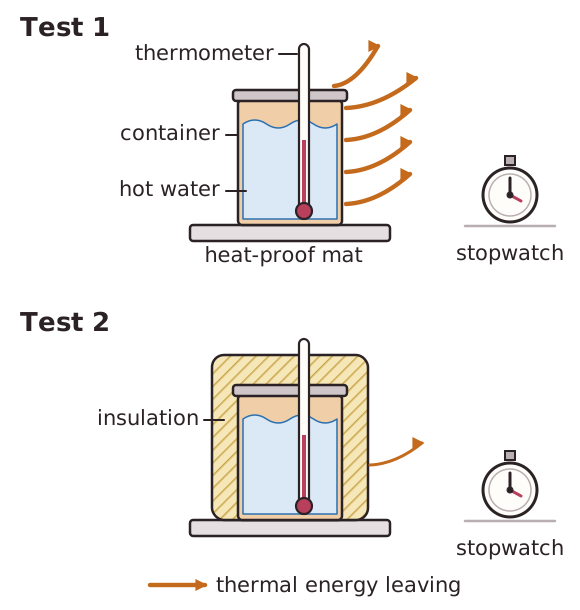
Unwanted energy transfers can be reduced. Lubrication, such as oil on a bike chain, reduces friction between moving parts, so less energy is transferred by heating. Thermal insulation, such as the wool in a loft, reduces the rate of energy transfer out of a building.
The higher the thermal conductivity of a material, the higher the rate of energy transfer by conduction across it. Metals have a high thermal conductivity. The rate at which a building cools is lower if its walls are thicker and are made of a material with a low thermal conductivity.
In the required practical, you compare materials as thermal insulators. You might wrap a beaker of hot water in different materials of the same thickness and record the temperature fall after a set time. The independent variable is the material. You keep the starting temperature, the volume of water and the time the same. The best insulator gives the smallest temperature fall.