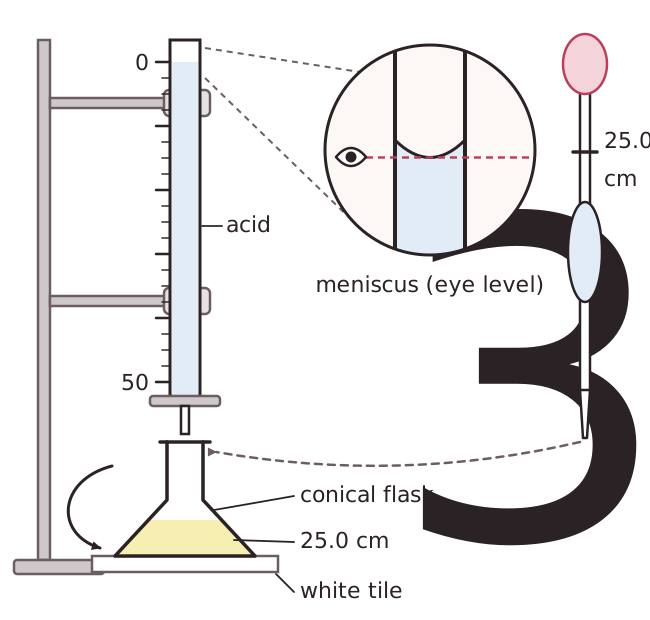
A titration finds the volume of acid that exactly neutralises a fixed volume of alkali. Use a pipette to measure 25.0 cm3 of alkali into a conical flask and add a few drops of indicator, for example methyl orange, which is yellow in alkali and turns orange then red as the acid takes over. Stand the flask on a white tile so the colour change is easy to see.
Fill a burette with the acid and note the initial reading, reading the bottom of the meniscus at eye level. Add the acid to the flask while swirling. Do a quick rough titration first to find roughly where the end point is. Then repeat accurately, adding the acid drop by drop near the end point, and stop when the indicator changes colour permanently. Note the final reading. The volume used, the titre, is the final reading minus the initial reading.
Repeat until you have titres that are concordant, meaning within 0.10 cm3 of each other. Ignore the rough titre and take the mean of the concordant ones. For example, titres of 22.40 and 22.50 cm3 have a mean of 22.45 cm3. A titre that is more than 0.10 cm3 from the others, such as 23.55 cm3 beside 23.15 and 23.25, is left out of the mean, which is then 23.20 cm3.