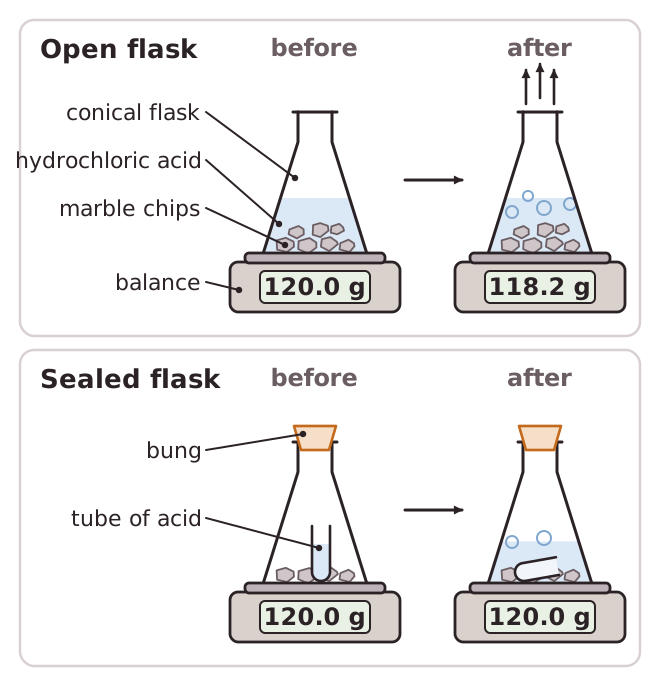
The law of conservation of mass says that no mass is lost or gained in a chemical reaction, so the total mass of the reactants equals the total mass of the products. This is because atoms are not created or destroyed. They are only rearranged into new substances.
In a closed system nothing can enter or leave. A precipitation reaction in a stoppered flask is an example, such as silver nitrate and sodium chloride solutions forming solid silver chloride: AgNO3 + NaCl → AgCl + NaNO3. If the flask and contents weigh 150.0 g before mixing, they weigh 150.0 g afterwards.
In a non-enclosed system, such as an open flask, a gas can escape or enter. When calcium carbonate reacts with acid, carbon dioxide is given off: CaCO3 + 2HCl → CaCl2 + H2O + CO2. The mass reading on the balance decreases because the gas escapes. When magnesium burns in air it takes in oxygen, so the mass of solid increases. In both cases the mass is still conserved. The gas is simply not being weighed. If you include the gas, the total is the same. Sealing the flask makes it a closed system and the mass stays constant.