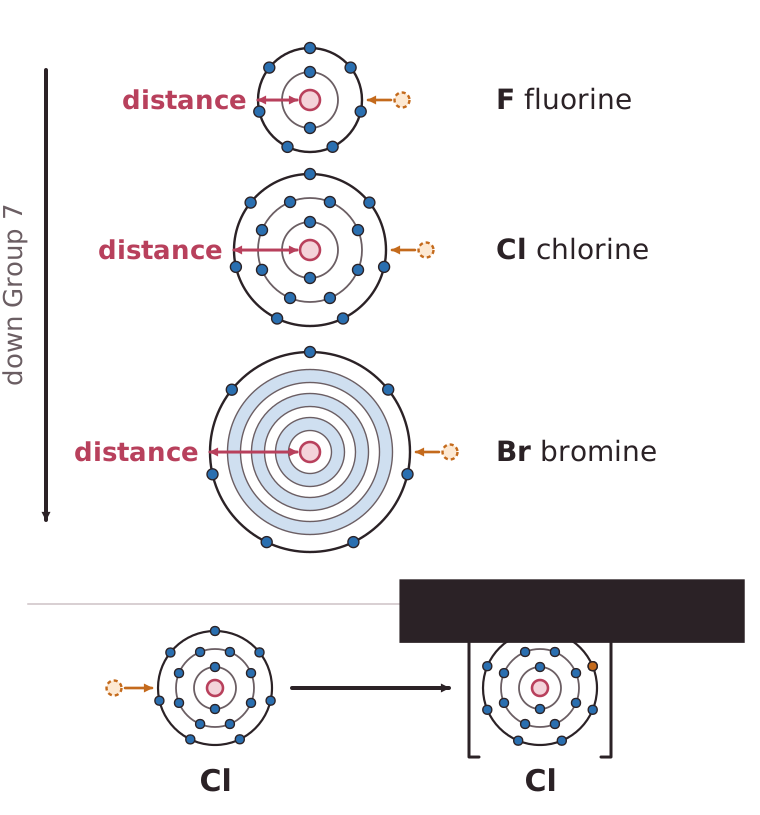
The halogens are the elements in Group 7. Each halogen atom has seven electrons in its outer shell. To react, a halogen atom gains one more electron, which gives it a full outer shell and turns it into a negative ion with a charge of 1-, for example Cl-.
How easily an atom gains that electron depends on how strongly the nucleus attracts it. Going down the group, each element has one more electron shell than the one above. The outer shell is therefore further from the nucleus and there are more inner shells between the nucleus and the outer shell. The attraction for an incoming electron becomes weaker, so the electron is gained less easily.
This means that reactivity decreases down Group 7. Fluorine, at the top, has its outer shell closest to the nucleus and gains an electron more easily than any other halogen. Iodine is much less reactive. The same idea explains displacement reactions: chlorine displaces bromine from potassium bromide because chlorine is more reactive than bromine.