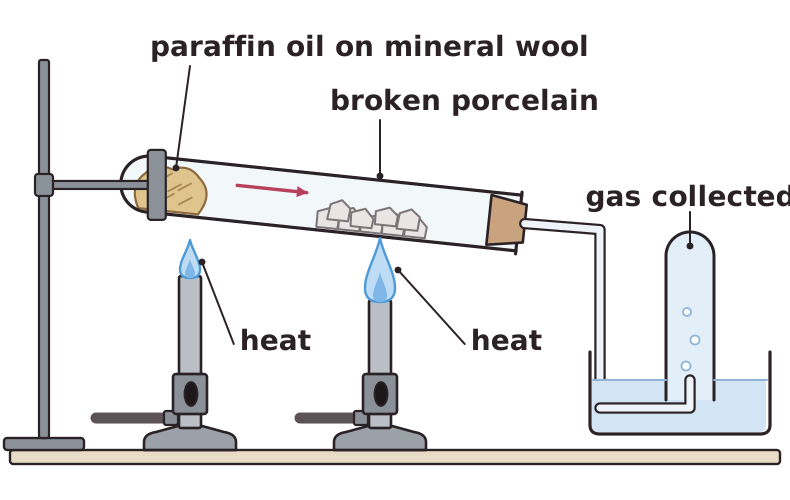
Cracking breaks large hydrocarbon molecules into smaller, more useful ones. The large alkane molecules are heated to make a vapour, and the vapour is passed over a hot catalyst, such as aluminium oxide. In another method the vapour is mixed with steam at a very high temperature. In the school practical, paraffin oil is heated and its vapour passes over hot broken porcelain.
The products are a smaller alkane and an alkene. For example: C10H22 → C8H18 + C2H4. The atoms balance, so the alkene, ethene, has two carbon atoms.
Alkanes are saturated because they contain only single bonds between carbon atoms. Alkenes are unsaturated because they contain a C=C double bond. Unsaturated hydrocarbons turn bromine water from orange to colourless, and alkanes do not.