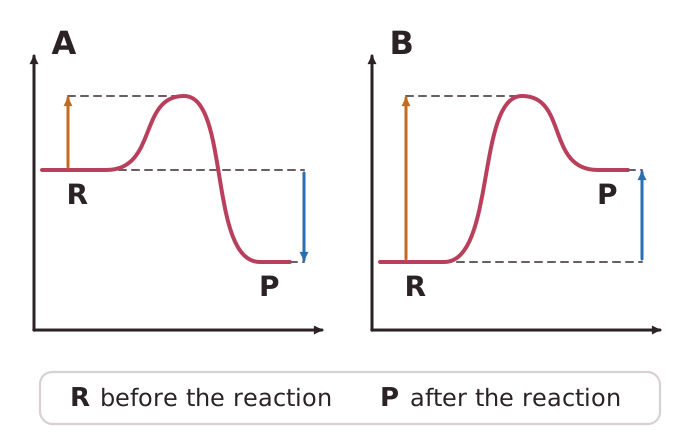
A reaction can only happen when reacting particles collide with each other and with enough energy. The minimum amount of energy that particles must have to react is called the activation energy. It is the energy needed for the reaction to occur at all, even if the reaction then gives out energy overall.
A reaction profile is a graph that shows the relative energies of the reactants and products as a reaction proceeds. Energy is on the vertical axis and the progress of the reaction is on the horizontal axis. A smooth curve starts at the energy of the reactants, rises to a peak, then falls or rises to the energy of the products. The height from the reactants up to the peak is the activation energy. The difference in height between the reactants and the products is the overall energy change.
In an exothermic reaction the products are at a lower energy than the reactants, so energy is released to the surroundings. In an endothermic reaction the products are at a higher energy than the reactants, so they have more energy than the reactants and energy is taken in from the surroundings. You can tell which type of reaction it is by comparing the levels of the reactants and the products.