 BRAINCAKE
Catalysts and Kc
A catalyst increases the rate of a reaction by providing an alternative route with a lower activation energy. In a reversible reaction it lowers the activation energy of the forward and reverse reactions by the same amount.
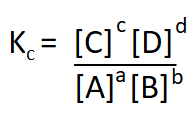
As a result, the rates of the forward and reverse reactions increase by the same factor. The equilibrium concentrations are unchanged, so a catalyst does not affect the value of Kc and the position of equilibrium does not move.
Sign in free to see the rest of this lesson, the R.E.C.I.P.E. recall steps and the quiz
BrainCake is free. Make an account in seconds and pick up where this page stops.
Key terms in this lesson
- equilibrium constant Kc
- The value, at a given temperature, of the equilibrium expression written in terms of the concentrations of reactants and products.
More in Equilibria
- Dynamic Equilibria
- Homogenous and Heterogenous Equilibria and Kc
- Finding the Value of Kc
- The Effect of Temperature on Kc
- Partial Pressures and Kp
All 6 lessons in Equilibria · All OCR A-level Chemistry topics