Aldehydes and ketones react with hydrogen cyanide, HCN, to form hydroxynitriles, which contain both an -OH group and a -C≡N group on the same carbon. A new carbon-carbon bond forms, so the chain gains one carbon atom.Reagents: HCN is a very toxic gas, so in practice it is generated in the reaction mixture from sodium cyanide, NaCN(aq), and sulfuric acid, H2SO4(aq). This provides both CN− ions and H+ ions.Mechanism: nucleophilic addition
1. The C=O bond is polar; the carbon is δ+. The cyanide ion's lone pair attacks this carbon, and the π-bond of C=O breaks, putting a negative charge on the oxygen.
2. The negatively charged intermediate is protonated by H+ (or by water) to form the -OH group.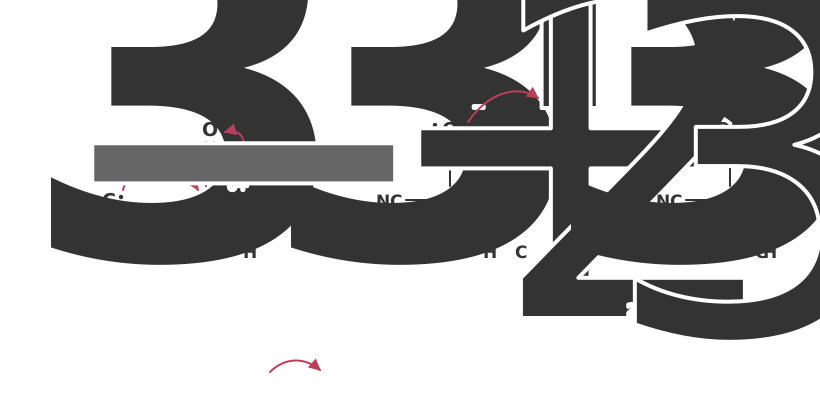
• Ethanal: CH3CHO + HCN → CH3CH(OH)CN, 2-hydroxypropanenitrile
• Propanone: CH3COCH3 + HCN → (CH3)2C(OH)CN, 2-hydroxy-2-methylpropanenitrileIn the name, the nitrile carbon is carbon 1, so the -OH is on carbon 2. With most aldehydes, the product has a chiral carbon. The C=O is planar and can be attacked equally from either side, so a racemic mixture forms.Worked example: name the product formed from propanal, CH3CH2CHO.
Adding HCN gives CH3CH2CH(OH)CN. The chain has four carbons including the nitrile carbon, and the -OH is on carbon 2, so the product is 2-hydroxybutanenitrile.
1. The C=O bond is polar; the carbon is δ+. The cyanide ion's lone pair attacks this carbon, and the π-bond of C=O breaks, putting a negative charge on the oxygen.
2. The negatively charged intermediate is protonated by H+ (or by water) to form the -OH group.
• Ethanal: CH3CHO + HCN → CH3CH(OH)CN, 2-hydroxypropanenitrile
• Propanone: CH3COCH3 + HCN → (CH3)2C(OH)CN, 2-hydroxy-2-methylpropanenitrileIn the name, the nitrile carbon is carbon 1, so the -OH is on carbon 2. With most aldehydes, the product has a chiral carbon. The C=O is planar and can be attacked equally from either side, so a racemic mixture forms.Worked example: name the product formed from propanal, CH3CH2CHO.
Adding HCN gives CH3CH2CH(OH)CN. The chain has four carbons including the nitrile carbon, and the -OH is on carbon 2, so the product is 2-hydroxybutanenitrile.