 BRAINCAKE
Directional Selection
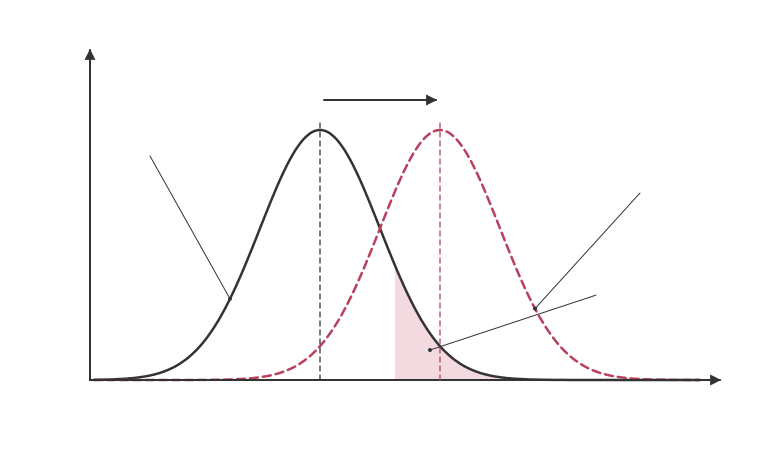
For many characteristics, such as body mass or height, a population shows a range of values that forms a roughly normal distribution around a mean. Natural selection can change this distribution in different ways.
Directional selection happens when individuals at one extreme of the range have a selective advantage. This usually occurs when the environment changes, so the previous mean is no longer the best value.
The steps are:
Sign in free to see the rest of this lesson, the R.E.C.I.P.E. recall steps and the quiz
BrainCake is free. Make an account in seconds and pick up where this page stops.
Key terms in this lesson
- selection pressure
- An environmental factor that affects the chance of survival and reproduction of organisms with a particular allele or characteristic.
More in Natural Selection
- Natural Selection
- Natural Selection in Oysters
- Natural Selection in Moths
- Reproductive Success
- Antibiotics
- Antibiotic Resistance
- Preventing Antibiotic Resistance
- Speciation
All 29 lessons in Natural Selection · All Edexcel AS-level Biology topics